Friendly Doesn’t Mean Weak: Balancing Politeness And Persistence when collecting invoices

Polite and firm are not opposites. In fact, they’re the secret weapon of every successful accounts receivable team. Too often, businesses assume that being friendly means being lenient. In finance, that misconception can cost you time, money, and customer relationships.
Access Intell Team Danielle Green
December 15, 2025
1
min read

The Accounts Receivable Balancing Act

The role of accounts receivable isn’t just about collecting payments. It’s about protecting cash flow while maintaining strong customer relationships. A professional tone signals respect and reliability, even when enforcing payment terms. When you strike the right balance, customers trust you and pay on time.

What Goes Wrong When It’s Ignored

Failing to combine politeness with firmness creates a slippery slope:

  • Customers test boundaries – If you’re overly accommodating, some clients will push deadlines further.
  • Terms lose meaning – Payment agreements become suggestions instead of obligations.
  • Delays become normalised – Late payments start to feel acceptable, eroding cashflow.

Practical Takeaway: Respectful Persistence Gets Paid

The most effective accounts receivable teams follow up consistently, communicate clearly, and stay courteous. Even when chasing overdue invoices. This approach keeps customer relationships intact while reinforcing that credit terms matter.

How to automate polite, persistent invoice collection calls

Access Intell’s agentic AI collection calls make this balancing act effortless. Our solution makes polite, persistent and personalised invoice payment and reminder phone calls. Automate the process so your team saves time and gets paid faster, without sacrificing professionalism. Try a live demo call to experience our agent for yourself.
Related Articles

Other articles you might be interested in:

Access Intell article - Credit Scoring And Risk Assessment Techniques You Need To Know
Credit Management

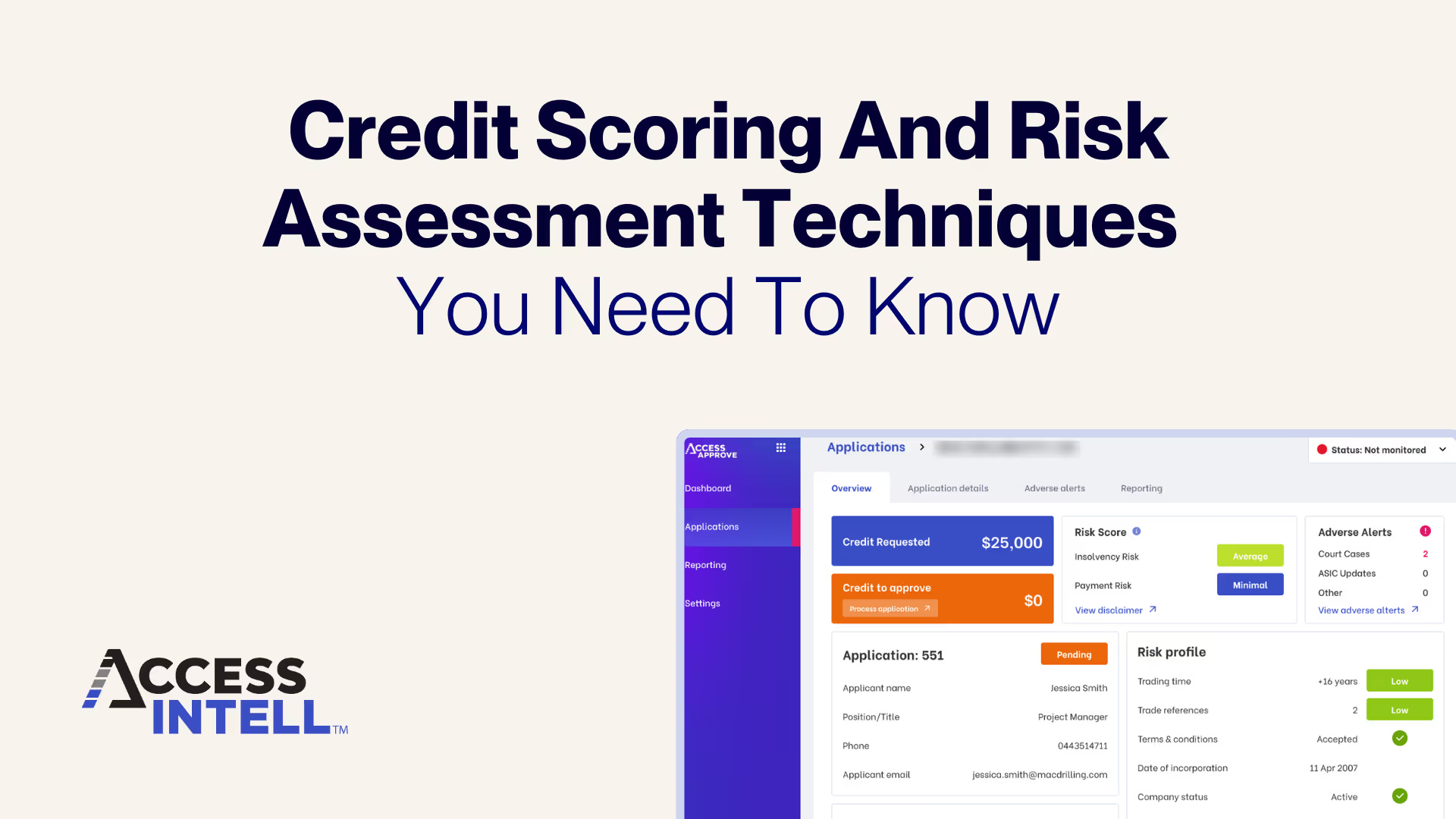
Credit Scoring And Risk Assessment Techniques You Need To Know

Credit risk management is a cornerstone of any financial institution’s operation. Central to this task are two key techniques: credit scoring and risk assessment. A blend of data analysis, financial intuition, and predictive modelling, these methods help banks decide who to lend to, how much, and under what terms. But what exactly are these techniques? And how are they applied in the real world?
View Article
Credit Management

Director Penalty Notices: What’s The Impact For Creditors

One of the collection tools used by the Australian Taxation Office (ATO) is to issue a Director Penalty Notice (DPN). The goal is to recover overdue business tax debt personally from current or former company directors. Once a non-lockdown DPN is issued, a director has 21 days to act before they become personally liable. Options typically are to pay the debt or appoint an insolvency or restructuring practitioner. This short timeframe often leads to insolvencies or small business restructuring seemingly coming ‘out of the blue’ to creditors. In this article we cover what a DPN is, ATO DPN rates, what does a DPN mean for creditors and risk management strategies (including accessing vital ATO business tax default data).
View Article
Access Intell article - A Creditors Guide To Small Business Restructuring
Credit Management

A Creditors Guide To Small Business Restructuring

Small Business Restructuring (SBR) is a lower-cost, faster insolvency option designed to help companies survive financial difficulties. They are increasing exponentially and are expected to continue to grow, now sitting at 22% of all corporate insolvencies. SBR presents unique challenges for creditors. Our guide covers what this process is, how the ATO relates, what it means for creditors and how it affects PPSR.
View Article

Ready to get paid, faster?

Contact us to start automating your invoice reminder and collection calls with AI.